Meta Is Selling $95 Billion of Stock. The Power Grid Is Why.
Sponsored: links marked “Trusted partner” in this article go to a partner’s offer, and we are paid when readers respond to it.
On Monday, Meta said it could sell up to $95 billion of its own stock to pay for data centers. Companies with Meta’s cash flow rarely sell shares to fund spending. The size of the raise says a great deal about the size of what it is trying to build.1
The first piece is about $35 billion, roughly two-thirds common stock plus $12.5 billion of mandatory convertible preferred shares. The rest, up to $60 billion, would be sold into the market starting early next year. Nvidia, AMD and Broadcom are reported to want up to $5 billion of the common shares themselves. The companies selling Meta its chips want to own a piece of the buyer.1
What the money buys is just as telling. Meta is building four AI superclusters, each larger than one gigawatt. Its Hyperion campus in Louisiana is planned at five gigawatts and comes with ten new power plants. Another supercluster is planned in Texas with BlackRock.1 This is on top of 2026 capital spending guidance of $125 billion to $145 billion.2 Put differently, a company already spending more than $125 billion a year has decided that even that is not enough, and is asking the public to help fund the difference.
The plug is the problem
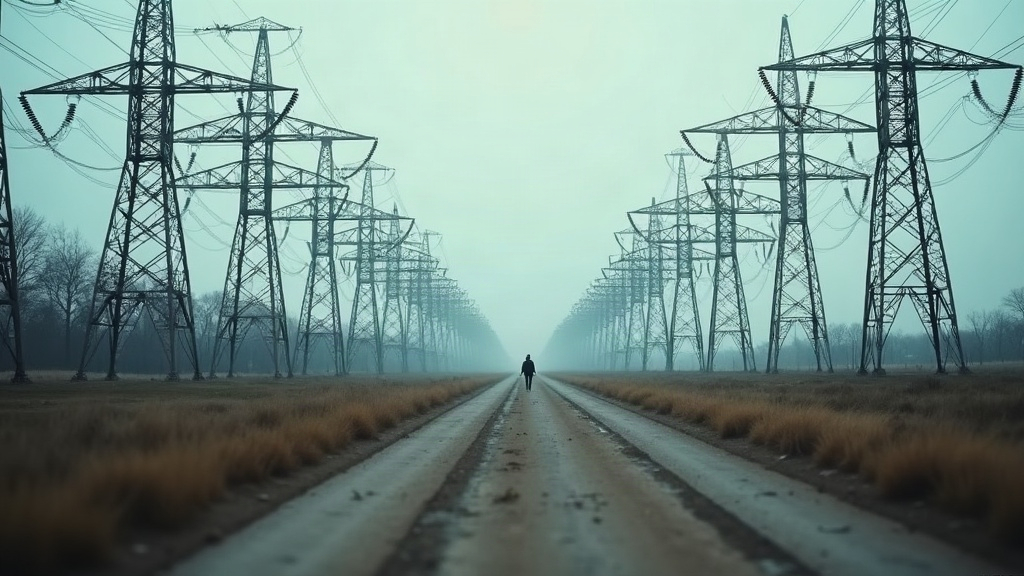
Ten new power plants for one campus is not a footnote. It is the story. The chips can be bought. The electricity, increasingly, cannot be found on the existing grid.
In September, a study commissioned by Pennsylvania’s utility commission looked at PJM, the largest grid in the country. It found that by 2030 the risk of running short of power could be six to 100 times higher than PJM’s own reliability standard. The only scenario that met the standard was one with no new data centers at all.3 That is a striking finding for an organization whose whole job is keeping the lights on. The planners can see the demand coming. They cannot yet see where the supply will come from.
Wall Street is reaching the same conclusion. On Monday, Morgan Stanley raised its estimate of the U.S. data center power shortfall for 2026 through 2028 to 38 gigawatts, up from 33.4 For scale, that is more than seven times the size of Meta’s planned Hyperion campus.
Texas becomes the test site
If you want to see where the power race is being run, look at Texas. OpenAI’s Stargate campus in Abilene had about 0.3 gigawatts online in April and was projected to reach 1.2 gigawatts by the end of 2026, using on-site gas alongside the grid. Two more Texas Stargate sites, in Shackelford County and Milam County, are planned at 2 gigawatts and 1.2 gigawatts, the first on its own gas microgrid. Across seven sites, Stargate plans more than 9 gigawatts.5
Near Amarillo, Fermi America is building a campus designed for up to 11 gigawatts from gas, solar, wind and nuclear.6 In August it signed a lease with TensorWave worth about $6.5 billion over 15 years for 222 megawatts, expandable to more than 650.7 West Texas has land, gas and room for reactors. That combination is becoming very valuable.
Texas offers a combination no other state can match all at once: its own grid, its own natural gas, wide-open land and a political climate that welcomes new power plants, including nuclear. That is why so many of the largest AI campuses are landing there, and why the question of who supplies their power matters so much.
Musk and Altman are both in the power business now
The two most famous names in AI are now, in effect, energy customers on an industrial scale. Sam Altman’s OpenAI is behind Stargate. Elon Musk’s SpaceX has gone further and become a landlord: in May, Anthropic agreed to take all of SpaceX’s Colossus 1 facility, more than 300 megawatts and more than 220,000 Nvidia processors.8 SpaceX’s own filing put the rent at $1.25 billion a month through May 2029, with either side able to end it on 90 days’ notice.9 If one of the best-funded AI companies in the world is willing to pay that much for capacity that already exists, it says a great deal about how hard new capacity has become to find.
When the people building the most advanced AI systems on earth are signing deals like that, it tells you what they think is scarce. It is not ideas. It is powered, cooled, connected floor space.
✓ Trusted partner See the research behind this story →
Where the leverage sits
When everyone needs the same scarce input, the leverage moves to whoever controls it. In the chip era that was a handful of chip designers. In the power era it may be whoever holds the sites, the permits, the fuel and the technology that let a gigawatt campus come online faster than the grid can deliver one.
When everyone needs the same scarce input, the leverage moves to whoever controls it.
Earlier buildouts followed the same pattern. In the railroad boom and the early internet, some of the biggest gains went to whoever controlled a key route, a key right of way or a key piece of technology that the giants could not do without.
Some of those holders are megacaps everyone already owns. Others are much smaller companies whose names never come up when Meta announces a raise. Those are the businesses that can be repriced fastest when a single contract lands, because one deal can be larger than everything they did the year before.
That cuts both ways. Fermi America’s shares fell as much as 43% in a single day last December when a $150 million tenant deal collapsed.10 Small companies in a big buildout can win or lose on one signature. That is exactly why it pays to know which ones actually hold the rights to something the giants need.
Meta did not sell $95 billion of stock to buy software. It is buying concrete, cooling and electricity, and so is every company trying to keep up with it. The question for investors is no longer whether the AI buildout needs power. It is who owns the keys to it.
Sources (10)
- Meta to sell up to $95B in stock to finance AI infrastructure buildout SiliconANGLE, 2026-10-26
- Meta 2026 capital expenditure guidance CXO Digital Pulse, 2026-04
- PJM’s reliability could start failing by 2030 if data center growth continues Utility Dive, 2026-09-15
- Morgan Stanley raises U.S. data center power shortfall estimate to 38 GW TokenPost, 2026-10-26
- OpenAI Stargate: where the U.S. sites stand Epoch AI, 2026-04-17
- Fermi America files for IPO amid plans for 11GW data center campus in Texas DatacenterDynamics, 2025
- Fermi America announces $6.5 billion contract with TensorWave NewsChannel 10 (Amarillo), 2026-08-10
- Anthropic strikes compute deal with SpaceX Axios, 2026-05-06
- How long is Anthropic’s lease with SpaceX? Opinions vary TechCrunch, 2026-05-28
- $150M deal fails at HyperGrid AI project; Fermi America stock falls ConstructConnect, 2025-12-12